Over the past year, several news outlets and think-tanks have reported on the benefits and status of home visiting programs both inside and out of the United States. The bulk of the reporting centered on the funding reauthorization for the federal Maternal, Infant, and Early Childhood Home Visiting (MIECHV) program, which faced a roller coaster of uncertainty for months. Additionally, several outlets shared first-person stories, data and analysis to illustrate the critical need to prioritize home visitation in budget and policy decisions.
Thanks to the raised profile of home visiting and its effectiveness through stories and reports, the recently approved California state budget included $158.5 million for a Home Visiting Initiative pilot program. This is a foundational investment for young children and families and, as First 5 LA’s Executive Director Kim Belshé said in a blog post about the budget, “represents a formidable down payment on our shared future.”
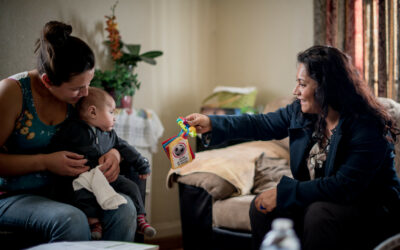
Home visitors are trained professionals working with new and expectant parents, providing them access to local parenting resources, and ongoing, individualized support. First 5 LA is one of the largest funders of home visiting services in California, and joins 45 of the state’s other First 5 County Commissions investing home visiting programs, reaching an average of 37,000 families annually.
While First 5’s support and the recent state budget investment in home visiting programs is a step in the right direction, it still falls short in meeting the need. To equip our readers with a comprehensive view of federal and state investments in home visiting and why we must continue to push for further investment, we have compiled a trove of news coverage, reports and videos from the past year. We hope this compilation provides a comprehensive picture of the current status of home visiting, and provides insight into next steps.
MIECHV Reauthorization
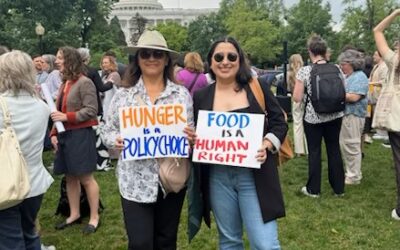
Parents and advocates from around the country are calling their elected representatives and taking part in a social media blitz today with a clear, powerful message to Congress: Act now to preserve and expand voluntary, evidence-based home visiting, or children and families will be hurt.
*Note First 5 LA is a member of the Home Visitation Coalition
House Republicans want to grow the reach of the federal home visiting program –MIECHV – by making states match the money dollar-for-dollar with a combination of state, county and private funds.
With promises of cuts to many federal programs in the upcoming fiscal year, advocates are making their case to maintain funding. The Maternal, Infant, and Early Childhood Home Visiting Program (MIECHV) is a prime example.
One of the items on Congress’ long to-do list of things to accomplish before the fiscal year ends is reauthorizing federal funding for home visitation programs that support parents and infants.
Members of a national Home Visiting Coalition expressed profound disappointment at the exclusion of federal funding for home visiting program from the continuing resolution expected to be voted on in the House of Representatives today.
- The Chronicle for Social Change: Home Visiting: MIECHV Delay Already Hurting State, Local Programs (2/6/18)
While national advocates still exude the general belief that MIECHV will ultimately be saved, confidence is starting to crumble at the state level where the funds are managed.
Early this morning, Congress passed a bipartisan budget bill, which includes an agreement to increase domestic spending caps and contains substantial victories for America’s young children from birth through age five. Notably, the Maternal, Infant, and Early Childhood Home Visiting (MIECHV) program, which expired in September of 2017, was reauthorized for five years, alongside other health extenders.
Home visiting programs for low-income families are off the chopping block for now. The budget deal brings relief to agencies whose future was in jeopardy after Congress missed a September 30 deadline to reauthorize the program.
Praise for Home Visiting Programs
Children who receive home visits are healthier, achieve more in school and have better social and emotional skills, according to a new study, released Monday by James J. Heckman, a Nobel laureate economist at the University of Chicago. (7/25/17)
There’s already a lot of evidence to show that home visitation programs have a positive impact on moms and babies. Now, Nobel laureate James Heckman and his team of economists have added more ammunition to the evidence-based practice.
- Kaiser Health News: Home Visits Help New Parents Overcome Tough Histories, Raise Healthy Children (8/21/17)
Gil, a family support worker with the Imperial County Home Visiting Program, has visited the family dozens of times since Leilanie’s birth. Each time, Gil teaches them a little more about child development and helps them cope with the stresses of work, school, relationships and parenting.
- Kaiser Health News: A Poor Neighborhood In Chicago Looks To Cuba To Fight Infant Mortality (1/10/18)
Over the past few months, medical professionals on Chicago’s South Side have been trying a new tactic to bring down the area’s infant mortality rate: find women of childbearing age and ask them about everything.
In the 1970s, Grantham-McGregor and Christine Powellbegan a research project aimed at helping young children from poor backgrounds and their moms in Kingston, Jamaica. The resulting studies found that children whose mothers received coaching made significant developmental gains, and not just in the short term.
Nationwide, high-quality home visiting programs have been found to have a profound impact on families, with some programs reducing language delays for children by 21 months, and reports of behavioral and emotional problems of children at age 6, in addition to decreasing state-verified reports of child abuse and neglect.
Two More Helpful Reports to Consider
- National Home Visiting Resource Center 2017 Home Visiting Year Book
- California Budget & Policy Center Issue Brief May 2018: Home Visiting is a Valuable Investment in California’s Families
Editor’s Note: “Can
you find me that one article from a few months ago…” was a common
question here at First 5 LA, so we started tracking news coverage on
early childhood development issues. “Making the News” organizes recent
coverage we collect in our Morning Media and Week in Review
newsletters. Our goal with this new series of articles is to hone in on
coverage one issue has received over the past year. It’s a helpful tool
for our advocacy efforts. We hope it helps your efforts as well. This
is a work in progress. Your comments on how we can improve this series
are welcome.
Sign up for First 5 LA’s Week in Review Newsletter and get a summary of the week’s top news and views impacting young children every Thursday afternoon.